Why Choose Functional Cable Trainer Racks?
Functional Cable Trainer Racks are becoming a practical centerpiece in modern strength facilities. They support pressing, pulling, rotation, squatting, and controlled rehabilitation work within one adjustable station. That range matters when a gym must serve beginners, athletes, personal-training clients, and older adults in the same room.
The American College of Sports Medicine’s Worldwide Survey of Fitness Trends consistently identifies strength training, functional fitness, and personalized coaching as major industry priorities. The Health & Fitness Association’s 2024 Global Report also reflects a competitive market, where operators must improve member value and use space efficiently. A cable trainer can answer both pressures. One frame may replace several single-purpose machines, while independent pulleys allow different training paths at the same time.
Space is expensive.
From practical installation experience, the best rack is not always the largest rack. A stable frame, smooth cable travel, clear adjustment points, and dependable weight-stack protection influence daily use more than dramatic styling. Trainers also need visible anchor positions and enough clearance for a user’s full range of motion. These details reduce interruptions during busy sessions.
Still, equipment alone does not create better training. Poor instruction can make an advanced rack confusing, even intimidating. That is the uncomfortable part. Facility owners should review ceiling height, flooring, maintenance access, user flow, and staff capability before purchasing. Functional Cable Trainer Racks offer strong versatility, but their real value depends on thoughtful programming, safe supervision, and consistent upkeep.
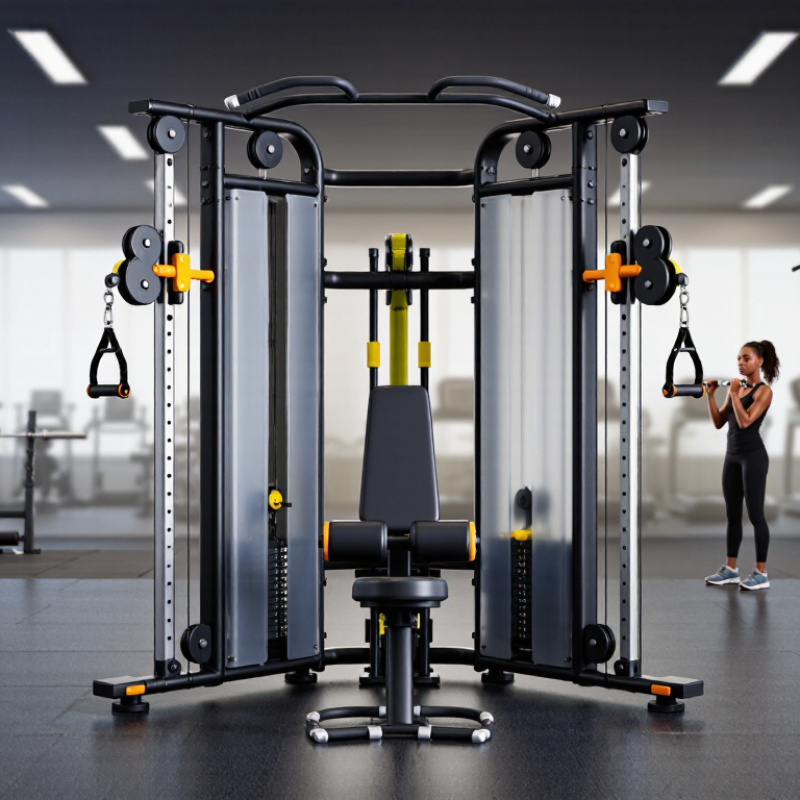
A functional cable trainer rack combines a sturdy frame, adjustable pulleys, cables, and resistance stacks. It often includes a pull-up bar and multiple attachment points. The pulleys move vertically, horizontally, or independently, depending on the design. This allows users to train pressing, pulling, rotation, and single-arm movements in one station.
Unlike a fixed machine, it supports more natural movement paths. A cable can stay under tension through much of an exercise. For example, a low pulley can support rows, curls, or split-stance presses. Adjustable handles also help users train at different heights. In practical gym settings, this flexibility can reduce equipment changes between exercises. It can also suit beginners, coaches, and experienced lifters.
Build quality matters. Check the frame welds, cable coating, pulley alignment, and weight-stack guides before regular use. A smooth cable path usually feels more controlled and places less stress on the attachment points. The listed load capacity should match the intended training style, not just casual testing. It is not magic. Some movements still require careful setup, stable footing, and a lighter starting load. I have found that users often focus on maximum resistance and overlook pulley height. That small mistake can change posture, balance, and joint comfort. Regular inspections remain necessary, even with a well-built rack.
A functional cable trainer rack uses pulleys, cables, weight stacks, and adjustable attachment points to create controlled resistance. When you pull a handle, the cable moves around the pulley and lifts the selected weight. Releasing the handle allows the stack to return smoothly, supported by guide rods and protective bumpers.
The rack works from many angles. You can set the pulley high for lat pulldowns, at chest level for rows, or near the floor for curls and presses. Independent cable columns let each arm work separately, which can expose strength differences between your left and right sides. The resistance usually stays more consistent through the movement than free weights. Still, cable friction and pulley position can slightly change the feel.
In practical use, adjust the pulley before loading weight. Stand squarely, brace your trunk, and keep the cable moving without sudden pulls. A mirror can help, but it cannot replace careful body awareness. I once set a handle too low and compensated by leaning backward; the exercise felt heavier, but the form became less reliable. That mistake matters. A functional trainer is versatile, not automatically safe. Inspect cables, pins, handles, and attachment points regularly. If the cable looks frayed or the stack moves unevenly, stop using that station until it receives qualified maintenance. Small adjustments often make the difference.
A functional cable trainer rack uses pulleys to transfer resistance from the weight stack to the handles. In an ideal system, a 1:1 cable ratio provides handle force equal to the selected stack load, while a 2:1 ratio makes the handle move twice as far and provides approximately half the stack load at the handle. Actual values may vary slightly because of pulley friction and cable alignment.
A functional cable trainer rack supports far more than basic pulling exercises. Its adjustable pulleys create resistance from different angles, helping users train strength, balance, and controlled movement.
A chest press works the pectorals, shoulders, and triceps while standing or seated. Cable rows train the upper back with steady tension through each repetition. Lat pulldowns develop the back and arms. Face pulls can strengthen the rear shoulders and support better upper-body posture. Low pulley attachments also allow biceps curls, triceps pressdowns, and lateral raises.
Leg training becomes more practical with cable resistance. Users can perform squats, split squats, reverse lunges, and cable pull-throughs. A rope attachment supports wood chops and controlled torso rotations. Pallof presses challenge the core without repeated spinal movement. Single-arm exercises are especially useful because they reveal strength differences between sides.
Small adjustments matter. Set the pulley near shoulder height for presses and lower it for rows or pull-throughs. Keep the ribs controlled, move slowly, and avoid letting the weight pull your body off balance. In my experience, cables make light loads feel demanding because tension remains throughout the movement. It is easy to overestimate progress. More weight is not always better. A cleaner repetition may build more useful strength than a heavier, rushed one. Beginners should practice with manageable resistance and stop when posture breaks down.
A functional cable trainer rack gives strength training a practical, adjustable structure. In coaching sessions, I have found that cable resistance encourages controlled movement through several angles. The pulleys let users train pressing, pulling, rotating, and squatting patterns. One station can support many exercises.
The biggest benefit is consistent tension. Free weights may feel lighter at certain points, while cables can challenge muscles throughout the movement. Adjustable handles also suit different heights, limb lengths, and training goals. A user can perform rows at chest level, face pulls near eye height, or low cable presses. Small changes matter. They can improve exercise comfort and technique.
The rack also saves space and supports progressive training. Adding modest resistance helps users build strength without sudden jumps. However, it is not automatically safer or better. Poor posture, excessive weight, or rushed repetitions can still cause problems. I sometimes see users chase heavier settings before mastering control. That choice deserves reconsideration. A qualified trainer should check setup, range of motion, and individual limitations. Stable footing matters too. The floor should not feel slippery during loaded movements.
Functional cable training continues to support varied strength programs. ACSM’s 2024 Worldwide Survey of Fitness Trends placed traditional strength training among the leading global trends. The 2024 HFA Consumer Report also recorded 72.9 million Americans using fitness facilities in 2023. These figures suggest strong demand, but popularity alone should not determine your purchase.
Start with the training space. Measure ceiling height, floor depth, and clearance around moving handles. A compact rack may suit a home gym, while a wider frame supports partner training. Check the pulley ratio, cable travel, adjustment points, and maximum load. Smooth motion matters more than impressive numbers. Inspect the frame welds, locking pins, cable coating, and base stability. Independent safety testing and clear maintenance guidance improve reliability. My first mistake was choosing capacity before checking usable space. It created awkward movement and limited exercise options.
Tips: Match the rack to real users, not imagined workouts. Test the lowest and highest pulley positions. Confirm that attachments store safely and remain easy to reach. Ask for replacement-cable availability and warranty terms. A rack can look excellent on paper, yet feel restrictive during a controlled row. Leave enough room for a full stride. Small clearance errors become daily frustrations.
Pulleys, cables, and weight stacks create controlled resistance. Pulling a handle lifts the selected weight. Releasing it allows a smooth return.
Yes. High pulleys suit pulldowns. Chest-height pulleys support rows. Low pulleys work for curls and presses. One station offers many movement patterns.
Each arm can work separately. This may reveal strength differences between your left and right sides. Uneven strength deserves attention.
It usually feels more consistent than free weights. However, pulley position and cable friction can change the resistance slightly.
Set the pulley first, then select the weight. Stand squarely and brace your trunk. Keep each pull controlled.
Setting a handle too low may encourage backward leaning. The exercise can feel heavier, but the form may become less reliable. I made that mistake once.
It supports pressing, pulling, rotating, and squatting patterns. Adjustable handles can match different heights, limb lengths, and training goals.
No. Poor posture, excessive weight, and rushed repetitions can still cause problems. Versatility is not a safety guarantee.
Add modest resistance gradually. Master control before choosing heavier settings. Heavier is not always better.
Inspect cables, pins, handles, and attachment points regularly. Stop if a cable looks frayed or the weight stack moves unevenly. Get qualified maintenance.
Functional Cable Trainer Racks are versatile strength-training systems designed to provide smooth, adjustable resistance through a network of cables, pulleys, and weight stacks or plates. Unlike machines that limit movement to one fixed path, they allow users to perform exercises from different angles and positions. By adjusting the cable height, handle, and resistance, users can target major muscle groups while improving coordination, balance, and control.
A Functional Cable Trainer Rack can support exercises such as cable rows, chest presses, pulldowns, squats, lunges, curls, triceps extensions, and rotational movements. Its main benefits include exercise variety, progressive resistance, efficient full-body training, and suitability for different fitness levels. When choosing the right rack, consider its frame stability, cable travel, adjustment range, weight capacity, available attachments, safety features, footprint, and ease of use. The best option should match your training goals, available space, and expected frequency of use.